Kenjiro Tsuda Sues TikTok Over Alleged AI Voice Cloning in Japan
A Tokyo court fight over 180+ videos raises new questions about publicity rights, platform responsibility, and generative AI narration


If you have ever scrolled past an anime clip that suddenly sounds “too perfect,” you already know the strange moment when a familiar voice seems present without the person being there; in Japan, that exact tension is now sitting inside a courtroom, because veteran voice actor Kenjiro Tsuda has filed a lawsuit targeting the company operating TikTok over what his legal team describes as an unauthorized imitation of his distinctive vocal identity.

The filing, submitted to the Tokyo District Court in November 2025, centers on narration that allegedly uses generative AI to mimic Tsuda’s voice, the one many fans instantly recognize from roles like Jujutsu Kaisen’s Kento Nanami and Yu-Gi-Oh!’s Seto Kaiba; according to the claim, more than 180 videos should be removed as soon as possible, and the argument is not simply about “sound,” but about identity, commercial use, and where the platform’s obligations begin and end.
What Tsuda is asking the court to address
To keep it clear, the lawsuit is framed around two main legal lanes, and you can track the dispute by following what each side says the videos represent in practice, ya pues, not just in theory.
Key points raised by Tsuda’s legal team
In Tsuda’s position, the contested narration is not a random voiceover but a monetizable imitation tied to a well-known performer, and the requested remedy starts with taking the content down; the complaint also cites estimated earnings attached to those videos, described as roughly 500,000–750,000 yen per month (about $3,100–$4,700 USD).
- Immediate removal request: over 180 videos that allegedly feature AI-generated narration imitating his voice.
- Publicity rights argument: that a celebrity should control commercial use of their persona, including a recognizable voice, not only their name or image.
- Unfair Competition Prevention Law argument: that the unauthorized use of a well-known identity signal can fall into prohibited competitive behavior.
When you read this kind of claim, it helps to separate two questions you can actually answer for yourself: Have you seen AI-narrated anime edits presented as “authentic” voice work on your feed? and when you see them, do you notice any labeling that clearly tells you it is synthetic?
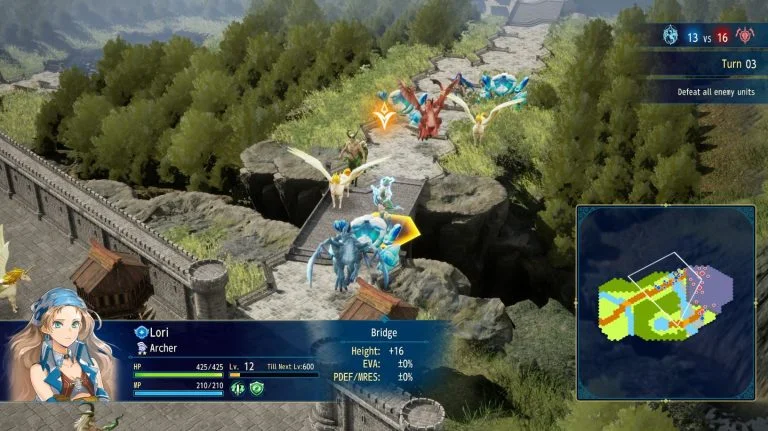
TikTok’s defense: “generic male voice”
On the other side, TikTok’s position, as presented in court, pushes back on the idea that the contested narration is uniquely identifiable as Tsuda at all; in simple terms, the company asked the court to dismiss the case and argued that what viewers hear is merely a “generic male voice”, meaning it would not qualify as an infringement of Tsuda’s publicity rights because it is not specifically him in any legally recognizable way.
This is where the case becomes practical for everyday fans and creators, boludo, because the dispute is not only about whether AI was used, but whether a platform (and a court) treats “voice likeness” as something distinct enough to protect, especially when the imitation sits in that uncomfortable space where it feels familiar but tries to remain deniable.

Why this lawsuit lands in a larger policy shift
Even without tying every government move to a single lawsuit, Japan has been building clearer guardrails around generative AI misuse, and in April 2026 the Ministry of Justice established a review panel focused on clarifying when damages may be awarded in cases involving generative AI videos that use a person’s likeness or voice without permission; at the same time, a large-scale 2025 survey by a Japanese consulting group documented suspected publicity-rights infringement cases in the generative AI era and emphasized a pattern you have probably noticed too, namely that what used to be “local” or “analog” now scales globally through social media in hours.
In that ongoing effort, the Japan Publicity Rights Protection Non-Profit Organization (JAPRPO), which commissioned the survey, indicated it would continue investigating these scenarios while aiming to build collaboration systems with platform operators and to help formulate industry guidelines for commercial AI use; if you work in content, marketing, or even fan-edit spaces, this is the kind of behind-the-scenes coordination that eventually changes what gets flagged, demonetized, or removed.
What you can do if you are a fan, creator, or brand
From experience doing content checks for small projects (the kind where you think everything is fine until a rights issue shows up late and forces a full re-edit), it is surprisingly easy to miss synthetic elements when they are presented as “just narration,” so if you want to stay on the safe side while this legal area tightens, you can take a few concrete steps that are simple but effective.
- Audit your workflow: if you use AI voice tools, document permissions and avoid “soundalike” presets that target a recognizable person.
- Look for disclosure: if you consume or repost clips, check whether the creator clearly labels synthetic voice use.
- Use platform reporting tools: when you see voice cloning aimed at a known actor, report it with the most precise category available.
- Follow the legal outcome: if you manage communities, keep an internal note of this case so you can update rules quickly when standards shift.
If you want a practical next step, take five minutes today, review the last few voiceover-heavy clips you saved or shared, and write down whether each one is clearly labeled as human or synthetic; then, share that checklist with your team or your friends who make edits, because staying organized now is the easiest way to avoid headaches later, and it is honestly pretty chévere when a community self-regulates before a platform has to do it for you.
Reactions
Share
Related articles
What Sanae Takaichi Really Said About the Cockroach: Lost Meaning, Phoenix, and a Misread Headline

Stay Updated: The Best Anime and Gaming News
Japan's Foreign Population Surge: A Demographic Shift Reshaping Major Cities
0 Comments
You must log in to leave a comment
Be the first to share your thoughts on this article.
No comments yet
Be the first to share your thoughts on this article.